Thursday, April 16, 2020

Letter to our MGC members: COVID-19 Update


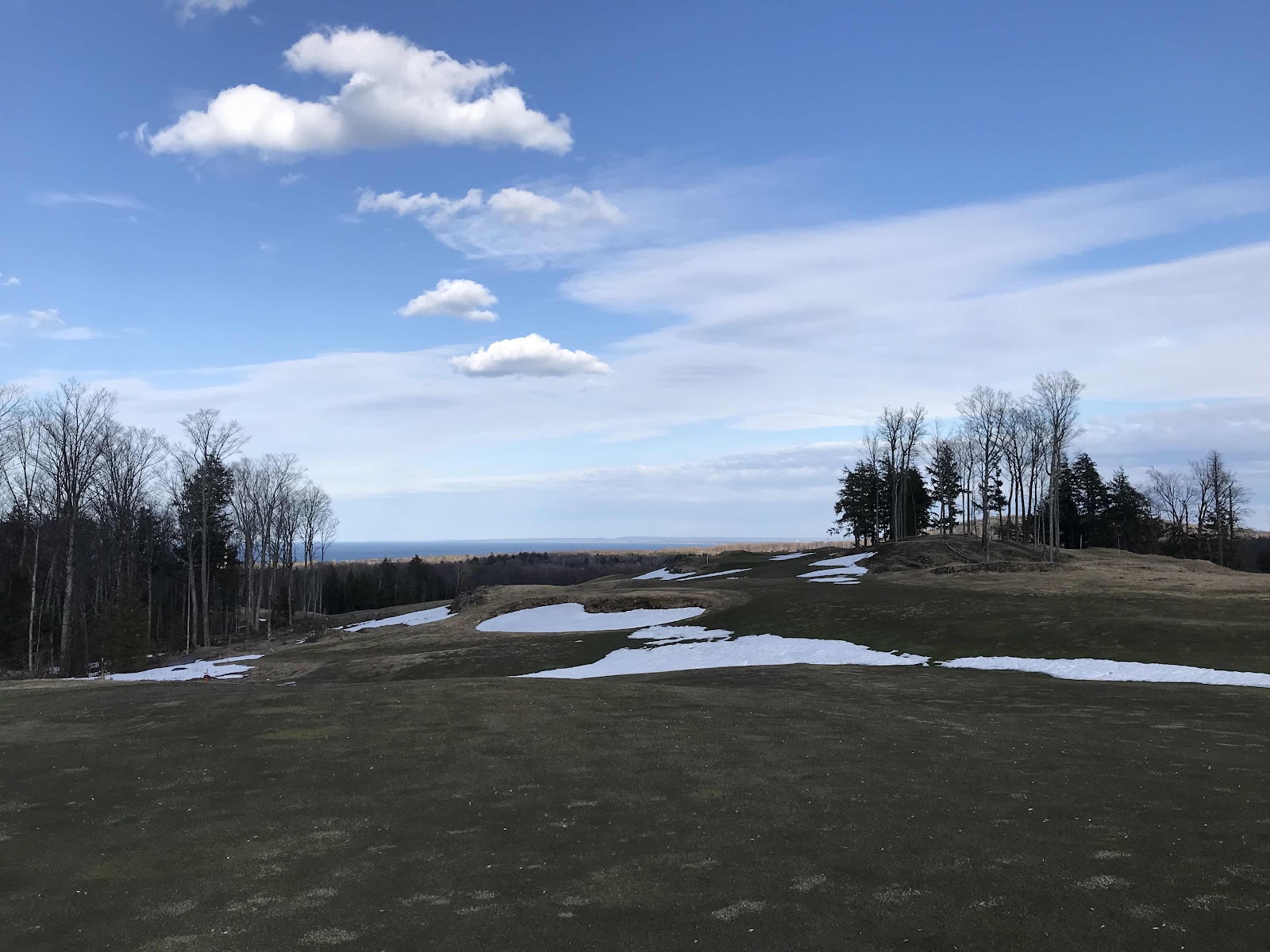
9 Greywalls before the latest snow storm; the turf on both courses has over wintered wonderfully so far
I have been relying on twitter (@marquettegolf) to provide course updates over the last few years as it is easier and instantaneous but occasionally I run into a topic that requires more information/data; this current Covid-19 pandemic is definitely one topic that requires more explanation.  
Everyone knows by now that our world has been altered from this virus.  Mandates have been passed down from the Governors office requiring the closure of all deemed non-essential businesses and activities.  New dynamic safety/sanitation changes are in place and are adjusted by the CDC as they learn more about the spread and how we can help control it.  
As of now golf has been deemed nonessential and has been mandated to close in the State of Michigan.  This has caused some definite differences in opinion in lower Michigan where golf courses were open for business and people were playing when mandates/restrictions started to take place; but I think we can agree that human health is priority number one.  If it takes temporary closure to gain control of the viral spread and allow new protocols to be developed and implemented so business can once again safely resume to some degree then that is the proper course of action.  For the first time I feel our extended winter has actually been a positive for our business; staff had yet to return for the season and the cold weather/snow events has not allowed golf to even be played yet in Marquette.  We are learning from the courses in lower Michigan and around the country as they traverse their new realities.  As a Michigan Turfgrass Foundation (MTF) board member I am briefed on the new mandates that we face from Lansing.  The MTF is part of the Michigan Golf Alliance (MGA) which has representation from all of the professional golf organizations within our State.  The MGA is the political voice for golf in the state with our elected officials. Their goal is positive communication and cooperation with Lansing to have us all safely golfing soon.  I have been participating in weekly meetings with industry leaders in lower Michigan to discuss the daily changes that are taking place while my national association the GCSAA has also been providing wonderful information and resources.  Marc has been getting updated reports from the PGA multiple times a week and we are discussing them on a regular basis to make MGC as safe as possible for staff/members/guests.  Maggie has been working on new protocols for the clubhouse and making alternative plans based on the latest mandates on the food and beverage industry.
A lot has been happening but rest assured we are on it as a team, staying up to date with the most current information available to us.  It is very important that we make a plan for the worst but continue to hope for the best.  


Changes that will be taking place on the courses this year that golfers will notice:
Increased golf cart sanitation
Elimination of Commonly touched surfaces
  1) Water coolers will not be placed out on the course
       It is recommended that you fill and bring a squirt water bottle with you as screw on/off tops should be avoided
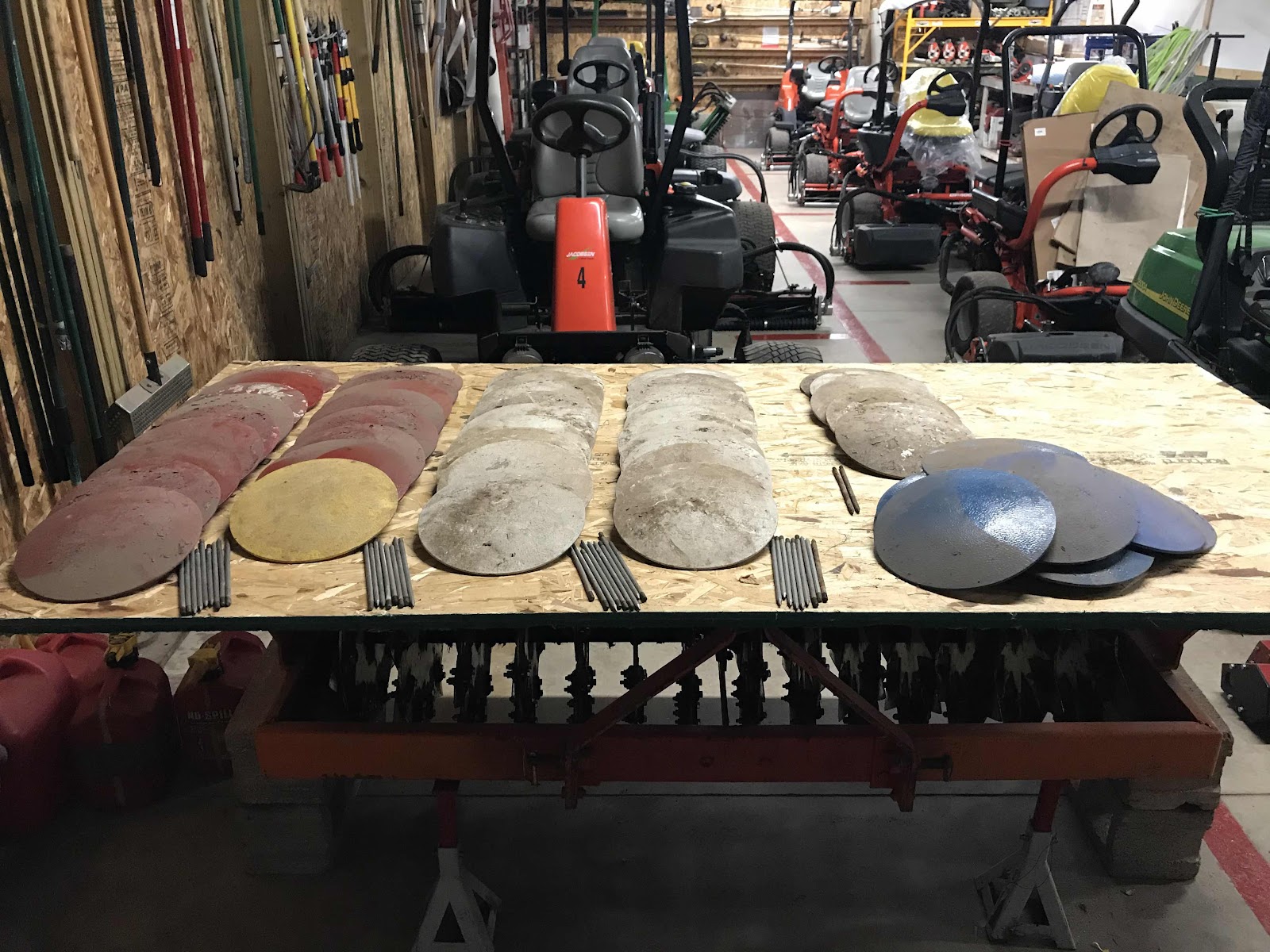
  2) 150 poles will be replaced with 150 yard plates cut into the surface
  3) Driving range set up will be adjusted with increased distance between hitting stations
      Club cleaner, bag stands and trash cans will not be available at this location
  4) Reduction/Modification to golf cart traffic control stakes
  5) Flagsticks are not to be touched and foam will be placed at the base of the stick to prevent the ball from falling to the bottom of the hole
  6) Bunker rakes will not be put out for use 
      Players will be asked to ‘foot rake’ your tracks
  7) Ball washers will not be put out for use
  8) Putting Green Sticks will not be put out for use on the practice greens and cups will be modified to prevent balls from falling to the bottom 
      Ball shag Rollers will not be available and you must bring/use your own practice putting balls
  9) On course seating Benches will not be put out for use
  10) Tee Markers will not be used for daily play but instead the stationary tee yardage blocks will be used to identify tee off locations
       The blocks have been painted a solid color so they are easier to see when they are cut into the tee surface
       A stake will be used on tournament or outing days to set up exact tee off locations but that is not needed for daily play.  
       Golfers will be asked to spread the wear across the tee surface at each tee off location.  


These old Yardage plates were pulled out of storage and will be cleaned/repainted and used in place of 150 poles 
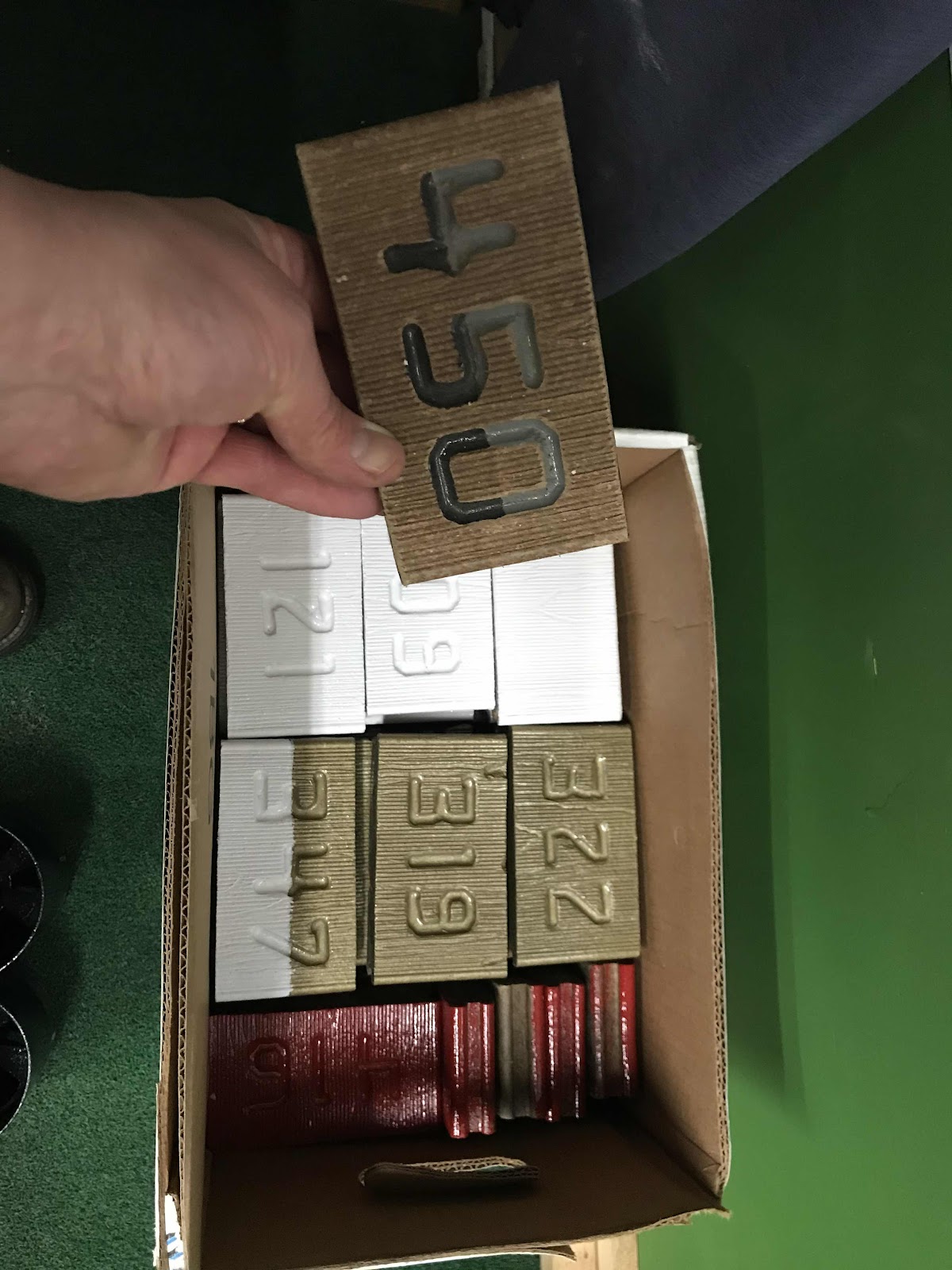

Tee Marker Blocks in the past just had the lettering painted (as the one being held) but are now painted a solid color as the ones in the box to make them easier to identify when cut into the surface.  
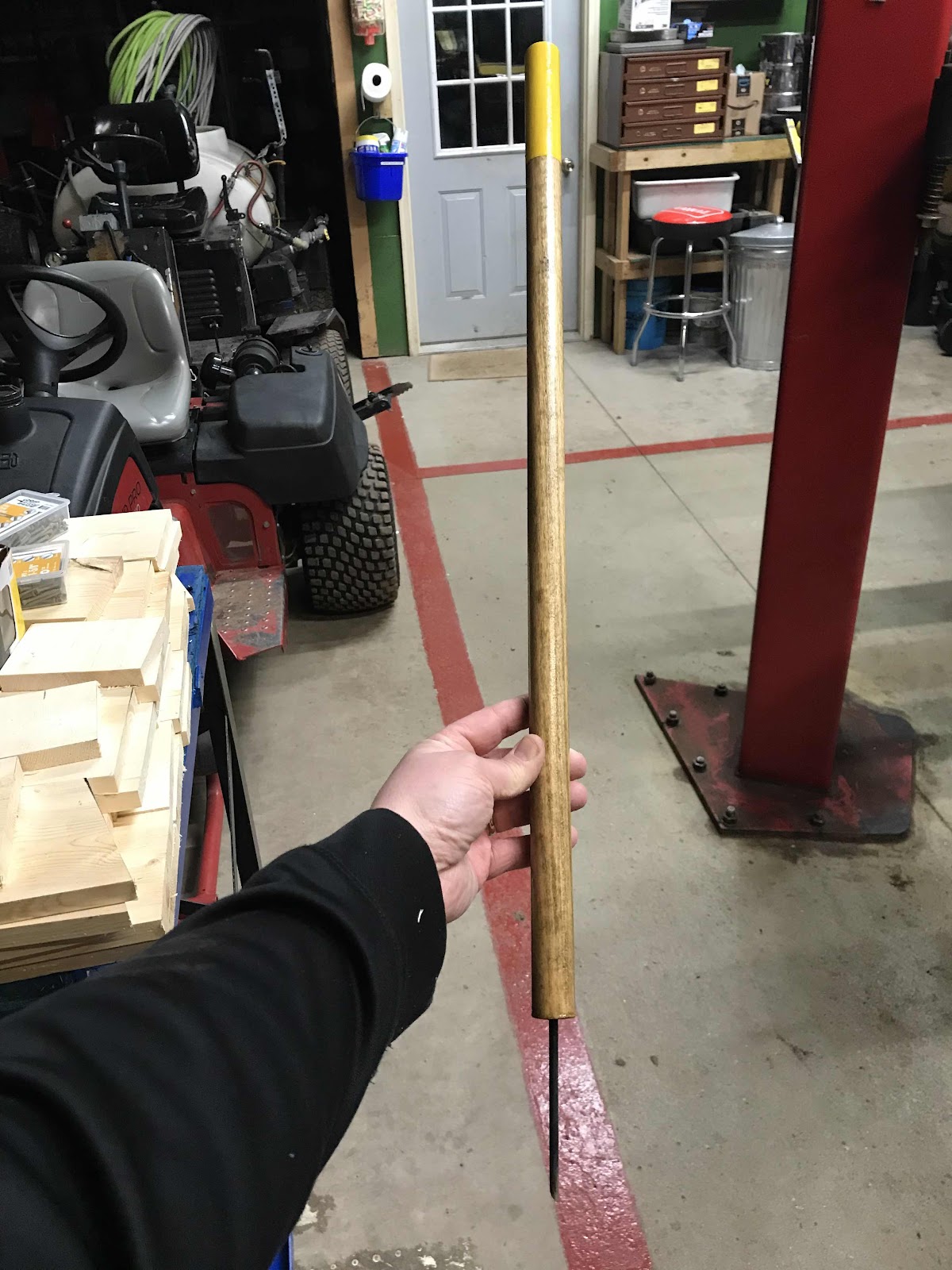

Stakes similar to these can be built and used on tournament and outing days to identify exact tee off locations


Grounds Specific:

While it is easy to shut the door to the Proshop /Clubhouse and simply re-open it at a later date during this Covid-19 pandemic the same can not be said for the clubs largest asset; which is the 350+ acre living ecosystem that makes up the two golf courses.  The turfgrass on the courses can not be neglected or it will be lost and the club will not be able to operate without a major renovation expense.  With this new reality in place I went to work and established a two part minimal maintenance plan to 1) protect the asset if not open for business and 2) to operate in a reduced revenue situation that we are potentially facing.  (Detailed below)
According to the language in the mandates/restrictions golf courses and clubhouses can not be open for business but we are allowed to complete minimal maintenance to protect an asset.  Our local government and police have been given the authority of interpretation and enforcement of these mandates so I drafted a letter of communication to our City Commissioner and our Chief of Police explaining our situation and outlining our minimal maintenance plan and increased safety/sanitation protocols.  Essential employees have been identified and will be given letters to carry with them so they are allowed to assist me with minimal maintenance when that time arrives.    .  
Work has continued in the shop on our equipment fleet as our mechanic Bob has been working in the Heritage shop by himself; I stop in to see him in the morning and we cover the daily goals by keeping a social distance of 20 feet from each other talking across the shop.  Bob is parking behind the shop and keeping the front door closed so no one feels the need to stop in and he can stay isolated and safe.  We then communicate via text and phone calls during the day as needed.  
I have been working early in the office then moving to the Greywalls shop to work in an isolated location.  The melt down last week allowed me to bring in two staff members on a few nice days to get the rope/stakes down from around the greens/tees and start cleanup from all the fallen trees/sticks/branches on the Heritage golf course.  We were able to get a good head start before this latest blast of winter arrived.  
Essential key staff will start back when field work can dominate our time as the goal is to eliminate any close contact with others and that can not happen when confined in our small shop spaces.  My work load has increased as I try to adjust and plan for what lies ahead.  Staying on schedule without my key staff has also been difficult and stressful, but it is the correct action for us to take at this time both economically and for the health/safety/well being of our very important staff.  
I have been cleaning plus disinfecting the shops/equipment and have created sanitation buckets for staff to use at our maintenance shops.  Staff will be required to disinfect all commonly touched surfaces after daily use.  


   We are indeed in strange times right now as we all feel some level of discomfort but I know Golf will be phased back into business soon and we will all be able to get out to enjoy fresh air, safe recreation and exercise on MGC’s wonderful property; until then wait for the snow to melt and stay safe.  

See you all Soon

-Craig 
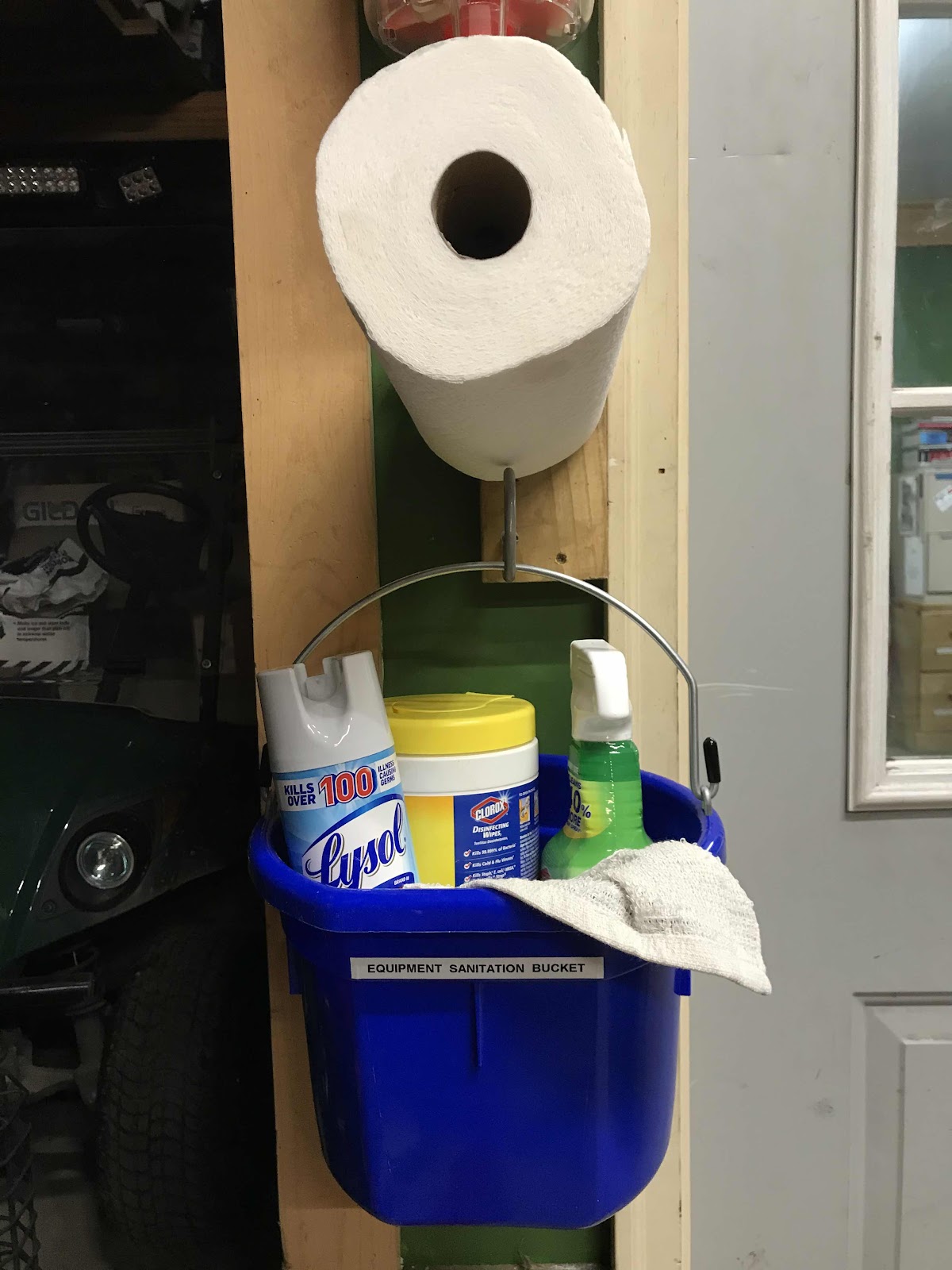


New sanitation buckets have been created like the one above.  They are located at each shop and equipment storage building.


Covid-19 Minimal Maintenance Plan

Course Management under two different scenarios

  1. Not allowed to be open for play; maintenance at a reduced level that allows quick revival of the playing surfaces (Minimal Staff)
  2. Open for play but with reduced revenue; adjustments in place with new efficiencies to save time and labor (Reduced Staff)

All Turf Playing Surfaces

  1. Fertility can be reduced on all surfaces as wear/traffic recovery is no longer a priority.  Plant Growth Regulators (PGR) use will increase to slow growth and reduce mowing frequency.  Fungicide application can decrease as plant stress is reduced from lack of traffic and wear.  Herbicide applications will need to continue as needed or we risk weed establishment on our surfaces.  The most efficient mowing patterns and angles will be utilized at all times.  Aerification can be scaled back if we do not have compaction issues from surface use.  Traffic control measures will not be utilized or maintained as there will be no need.  
  2. We will fall back in line with our Minimal Levels of Sustainable Nutrition (MLSN) fertility program based on soil testing.  PGR use will continue as usual to control vertical growth and enhance lateral growth.  Fungicide/Herbicide applications will proceed as needed.  The most efficient mowing patterns and angles will be utilized the majority of the time; changing those patterns needs to take place occasionally for proper turf surface management.  Aerification and over-seeding will take place as usual to keep the long term health of our turf a priority.  Traffic control measures will again take place as needed but will be reduced.  

Putting Surfaces

  1. Performance will no longer be a priority so the Height of Cut (HOC) can be raised from 0.125” to 0.150” and will reduce the need for chemical inputs.  Surface grooming will not need to be performed as frequently and sand top dressing can be reduced as growth will be less.  Mowing will be completed only 3-4 days a week depending on growth rate.  Cups will not need to be cut if we are not open for play.  
  2. Performance should be scaled back as we look for ways to save based on reduced revenue.  Obviously the putting surfaces are the last place we would want to reduce our efforts but still can happen to save some money in the short term.  I recommend we stay focused on firm and true but scale back on speed and raise the HOC to 0.135” so we can increase plant health and decrease plant stress that could need increased inputs.  Rolling in place of mowing will be determined based on yield.  

Approaches

  1. Approach mowing will take place 1-2 times per week based on growth rate.  Grooming will take place in the spring but then will be scaled back as other tasks take priority with our reduced staff.  
  2. Approach mowing will return to our normal twice a week mow schedule and grooming will take place as needed to enhance ball movement entering the putting surfaces.  

Fairways

  1. Fairway mowing will be reduced to once a week but may need to happen twice during times of excessive growth like we experience in the spring and early summer months
  2. Fairway mowing will take place twice a week to keep the turf managed properly.  150 yard poles will be replaced with our old circular plates to eliminate another commonly touched surface and eliminate the need for moving them while mowing.  

Tees

  1. Tee mowing will be completed only once a week and tee markers will obviously not be needed.  
  2. Tee mowing will be completed once to twice a week depending on growth.  I recommend we do not use tee markers this year but instead use the 3”x5” tee blocks that are in the surface as guides for golfers.  The lettering on the blocks was only painted before but now the entire block is painted so they are easier to see.  Having no tee markers to move daily will eliminate another commonly touched surface plus save 8 hours of labor a day between the two courses.  It will also cut the mow time in half as the operator will not be needed to stop and get off the machine at every tee surface to replace all of the markers; a huge efficiency and savings.  

Rough

  1. Rough mowing can be drastically reduced if we are not open for play.  The rough can be cut every two weeks to completion.  On the off week we will only complete the perimeter cut (2 passes around the perimeter of the Fairway/Approach/Green and 1 pass around the tees).  Clumping is not a huge issue outside the areas of closer mowed turf if golf is not being played.  
  2. We will resort back to mowing rough to completion once a week to keep these areas manageable for the game of golf.  Extra perimeter cut will take place as needed based on growth.  

Divots

  1. Divots will not need to be filled if we are not open for play.  
  2. Divot care is a top priority for our staff and will continue to be in order to fill voids in our playing surfaces and eliminate weed encroachment.  Tee surfaces and select fairway/approach locations will continue to be managed.  

Bunkers

  1. Bunkers will be raked once as a spring clean out and then they will not be raked again until play resumes.  If we experience a significant rain event that washes out bunkers we will make those repairs.  Bunker rakes will not be placed in bunkers.  
  2. We will rake bunkers only once weekly and touch up as needed in between.  Bunker rakes will not be placed back in bunkers this year as we try to eliminate surfaces that are commonly handled by everyone.  In the future when we do return bunker rakes to the bunkers we will require them to remain inside the bunker and off the turf.  This policy will reduce our trim mowing by approximately 2 hours per week as it eliminates the need to stop and get off the mower multiple times to move rakes.  

Irrigation

  1. Minimal watering will take place and seasonal dormancy will be embraced to reduce the need for mowing.  No traffic to damage dormant turf will allow us to do this and conserve.  
  2. Irrigation will go back to our regular conservation methods dictated by our water supply.  We will manage to keep the surfaces dry enough for the enjoyment of the game but moist enough for plant recovery and growth but favoring the dry side.   

Cups

  1. Cups will obviously not need to be cut if we are not open for play
  2. We already cut cups based on rounds and wear.  If play is reduced we will reduce the amount of times we cut cups.  We will place a foam piece around the base of the flagstick so the ball does not fall to the bottom of the cup and the flagstick will not need to be touched to retrieve the ball.  The ball will be deemed holed out after it makes contact with the foam.  You will be asked to not touch the flagstick.  

Course Grooming

  1. Course grooming will be reduced to once or twice a year.  
  2. Course grooming has evolved and has been managed more efficiently every year.  A combination of early mechanical and chemical controls has drastically reduced the amount of labor needed to groom many areas on the golf courses.  We will continue to utilize these tactics to manage those identified areas for the game.  

Equipment will be wiped down before and after daily use.  Rags with spray disinfectant will be used to wipe all commonly touched surfaces such as seats, steering wheels, keys, switches, handles etc.  Hand tools also fall under these sanitation guidelines.  This new protocol will be mandatory and must be followed by all staff.  

Staff will be asked to wear work gloves

Shop door handles and time clocks will be disinfected in a similar fashion daily.  

Other areas of sanitation will arise as the season goes forward and those areas will be addressed accordingly to create a clean and safe work environment.   

Social Distancing will be practiced at all times with no exceptions; morning assignments will be written on the board and given orally outside or across the shop.  Close congregation of staff will not be allowed and we will consider staggered start times.  

I propose a change to the way we clean our course Bathrooms, pro shop bathrooms and complete Clubhouse cleaning process.  We need to assign this task to one individual so proper protocol can be followed consistently for the well being of our membership, guests and staff.  This individual will clean the on course bathrooms/pro shop bathrooms first thing in the morning before play begins then they will clean the clubhouse.  This is a very important job that needs increased attention.  Details for this adjustment are in place.  

Essential Employees for bare minimal maintenance will be identified and letters will be written for them to carry in their vehicles.  



Thursday, January 31, 2019

Heritage Course Tree issues

We will soon begin to remove trees on the Heritage course following the forest management plan we have in place.  I would like to share pictures to show the type of trees we will be targeting first; these trees are along the plowed trails on the way out to the 5/6/7 gully/ravine that is getting cleared out.  


Canopy decline with hazardous broken branches hanging above 


A fine example of total tree dieback 


With the leaves off this Maple you can see the dead center.  The large center trunk broke off several years ago.  


Another thin canopy on a Spruce between 3/8


This Spruce between 4/5 will fall on its own very soon as did the 4 that used to grow next it.  


A close up picture of the needles shows the insect/disease severity we are experiencing with our conifers on the Heritage course.  


A conifer marked for removal between 3/8

Information on the type problems we face with conifers can be found in the links below:


Friday, December 14, 2018

Forest Management Progress

Perfect early winter conditions has allowed us to complete this years planned forest management on the Greywalls course.  Early snow with a cold snap froze up the ground allowing equipment traffic with limited negative surface impact.  3 areas were managed. 
1) Our SE corner was select cut to thin out the tree stand and remove all undesirable species; Healthy hemlocks and maple trees were left with more room to grow.
2) The wooded section between holes 8/9 was select cut on the number 9 side to remove the many maple trees with canopy die back.  
3) A 1.75 acre site left of 18 green was clear cut.  In time we will remove all of the stumps and convert this location into a turf nursery that can also be utilized as a practice putting/short game area.  


Tree removal equipment utilized on property.  Quick and efficient.  


Large forwarder removed the logs and brush quickly.


Logs stacked in a landing area by 18 green.


Logs stacked in a landing area at the SE corner. 


Tree tops stacked in a staging area awaiting a chipper.  


Chipper blowing tops right into a semi-trailer for quick removal.  

Three roads in the rough are being plowed on the Heritage course to the last section worked on this winter.  Removing the snow allows the ground to freeze so it can handle equipment traffic.  We will be removing trees from the 5/6/7 ravine to regain shot options; we will also be removing some spruce trees that are in decline or negatively effecting turf and golf holes.  
We will have additional cleanup in the spring but the long term impacts this process will have on the courses will be very positive.  


Thursday, June 14, 2018

Property/Forest Management


I have had several conversations of interest in regards to a Property/Forest Management plan we are going to undertake here at the club.  Below is a summary of that plan and our goals going into it.  I want to make it clear that we do not hate trees, trees are a part of our environment; when trees are selected properly, managed properly and are growing in the correct location they indeed enhance the MGC property.  92 years of golf with very limited/poor tree management put MGC in this situation and the time is now to take corrective action.  The easy thing to do is ignore it and do nothing..... but I've never been known to go in that direction.  


Property/Forest Management

Property management of the MGC grounds has primarily been limited to the turfgrass surfaces; but the 350 acres owned by the club includes many wooded areas that can not be ignored.  We have been removing 20-60 trees a year in-house that have fallen from weather, suffered perimeter exposure dieback or have fallen victim to disease/insect issues; our effort are lagging behind the pace that needs to occur.  Twelve years ago the grounds department started the evaluation process of the wooded acreage and the need for Forest management was identified.  Years of discussion and brainstorming brings us to our current situation where forest management must happen. 

The goals of our forest management plan are simple:
1)      Reclaim the vistas, shot values and options lost on several holes from excessive tree growth plus remove trees that were planted in poor locations. 
2)      Long range plan of creating a better/stronger/attractive internal/perimeter forest.  Remove first growth trees (birch, poplar) plus diseased/damaged trees all with limited value.  Select cut other tree species to create room for horizontal growth on the trees left behind. 

These goals obviously can not be accomplished in-house and must be out sourced to professionals.  We formed a relationship with Holli Forest Products to accomplish these goals.  Five field meetings with their foresters and several table meetings has created a mutual understanding of our forest goals here at the Marquette Golf Club.  They have a clear understanding of our terrain and the sensitive nature of this property; the comfort level on both sides is good.

The outlined work will have the following property protective guidelines:
1)      The work will take place in the winter months so there is no disruption to the golf season and surface impacts are minimal. 
2)      Temporary roads will be clearly marked out in the fall prior to snowfall and all fairway crossings will be crane matted. 
3)      Roads will be rubber plowed in early winter so the ground can freeze to handle traffic.
4)      Brush and Slash will be chipped where feasible so the areas (especially the visible edges) are not littered with branches

The work will be divided into 2 phases.  Phase 1 will take place the winter of 2018/2019 and phase 2 will take place the winter of 2019/2020. 

Phase 1:
-Gully on the Heritage (Holes 5/6/7) – clearing the gully will restore all shot options off the teeing surfaces, open up lost vistas and eliminate the dangers that the trees growing in that gully currently possess. *All hand cutting and cable work*
-Removal of the many dead and diseased spruce trees on the Heritage (North side of Grove) These trees are all in major decline: a factor of age plus Needlecast/tip blight/canker diseases and Spruce Gall adelgids insect damage has left them dead or on the verge of death.  
-Select cut the SE wooded corner of the property behind the Greywalls Maintenance shop and number 12 green and extend into the back 9 internal wooded pockets if time allows. 
-Clear cut an area North of 18 green Greywalls to open up a location for a turf nursery that could double as a large putting green. 
-Select cut the wooded area to the right of number 1 fairway Greywalls

Phase 2:
-Select cut the largest wooded area on property located between the two golf courses extending into the internal wooded pockets on the Greywalls front 9 and down the back nine on the Heritage course.  *Extra care must be taken around the Orianna, cart barns and our pond fill line for the Heritage course. 

Both Phases are estimated to take several weeks to complete and we will see some pay back for the lumber.  The extra work involved in this project (because of our sensitive site and required chipping) cuts into our profits but must take place; protecting and enhancing the golf courses is the priority during the project.  Staff will be on site during the lumber process to make sure our objectives are met.  We will have cleanup and stump grinding to complete in-house after snowmelt; some degree of turf damage isolated to the rough will be expected. 
 

Spring into Summer

Spring was very late to arrive as we had snow cover for 180 plus days in many locations.  Both golf courses handled the winter well with the exception of the teeing surfaces on Greywalls.  We had significant snowmold damage on those surfaces but we were able to enhance recovery quickly.  Vertical mowing, fertilization and an additional fungicide application gave the tees what they needed to recover in only two short weeks.
  

Tees like this are now looking mid-season form.  

Irrigation systems were put back together and pressurized for the season.  We had 3 pipe failures on Greywalls from frost heave and 6 broken head on the Heritage course.  


Quick coupler on Greywalls #5 green releasing air/water as we fill the lines.  


A main line pipe failure discovered on the Heritage course.  The cause is a tent stake from an outing we hosted last season.  A clamp is on order to make the repair..... never wise to cut asbestos pipes if you don’t have to.

The new bathrooms on Greywalls and the clubhouse deck were given a fresh coat of stain/sealer to extend the life of the wood and enhance the look of the structures.  


Irrigation audits are in place to check the performance of the irrigation heads.  


We are now into our summer grooming season.  Putting surface management is our top priority as we complete vertical mowing and sand Topdressing every 3-weeks to keep the surfaces smooth and true.  

Sand Topdressing on Greywalls before a spike unit is run over the surface and we drag the sand into the canopy.  


After we drag the sand into the canopy new cups are cut and brush reels are run over the  turf to collect any large sand particles.  


Sand on the Heritage greens awaiting further work.  


7 green on the Heritage course with perfect sand coverage.

Mowing schedules, proper course inputs  and performing regular cultural practices will keep our surfaces in fantastic condition now and into the future.

Saturday, April 21, 2018

Snow Cover


Digging out to the Greywalls shop Door after the Mid-April snow storm.  


Snow pack up to the lean-to roof line


The Mid-April storm event even filled the buildings with snow.  


This has indeed been a very long winter.  The MGC property was covered with snow on November 8th and we have not seen the turf below since that morning.  We are now over 160 days of snow cover making it the longest I have experienced as a manager.  Preventative snowmold applications that we apply in the fall can typically provide control for around 120 days; because we are beyond that time frame we should expect to see turf damaged from winter fungal pathogens when the snow recedes.  Most of the damage we will experience should recover quickly with the proper care and warmer temperatures.  
The weather has now changed into a spring pattern and snow melt is happening rapidly.  We will be prepared and we look forward to spring cleanup and course preparation.  

Thursday, February 8, 2018

Cutting Cups and Hole Locations

Hole Location

A top 10 hot Topic on every golf Course before/during/after a round is the hole location on the putting greens.  The 'natural law of ego' causes the individual holding the putter to cast words of blame immediately at the hole location after a missed putt.  Never mind the fact that there approach shot placement was poor, they read the green wrong or did a poor job with speed control... it is usually always the actual location of the cup that caused the miss.... A natural law I do not see changing anytime soon on golf courses everywhere.  There is always a desirable location to be when your ball comes to rest on the putting green after your approach shot.  It is up the player to figure out ball placement and gain that advantage over the course.  
With those points disclosed I would like to address the actual process we go through when selecting hole locations during our morning course prep.  

Priority Number 1
Keep it playable and don't put out any impossible hole locations.  
Yes this is the first point we focus on every single time we are out placing the hole locations during morning prep.  It is never our intention to upset anyone, we want everyone to have an enjoyable experience.  We want happiness and not anger.  

Priority Number 2
Move the hole location around so the wear is evenly distributed over the entire surface.  
Turf takes time to heal after concentrated traffic occurs around a hole for a day or two, if quality is important all areas on a green must be utilized.  
We actually keep a log folder that goes out every time with the set-up individual.  The past positions are reviewed at each green so we can ensure the positions are being moved around properly.  If the location is front it moves to middle, if its middle it moves to back, if its back it moves to front.  The right-center-left is then based off past locations and ease of the location in relation to other locations on that given day.  

Priority Number 3
Perfect plug replacement.  
When replacing the plug it must be completed perfectly.  High plugs will scalp off during the next mowing and cause unsightly rings, low plugs create a depression that will disrupt ball roll and over time turn into darker green rings as the turf growth thicker and longer in those areas.  There is a process to plug replacement and it is not as easy as most think it is.  

Priority Number 4
Make sure the cup is level so the flagstick rises up straightly.  
This is achieved while sinking the hole cutter into the soil; one must be observant so the cutter is not going in at an angle.  Only minor adjustments can be made with the cup to get the flagstick straight after the hole is cut, so it is important to get a straight hole cut with the hole cutter.  

Priority Number 5
Avoid areas of damage or potential damage.
When selecting the location we want a healthy area of turf around the hole so perfect ball roll can be achieved by players and more putts can be made if putted properly.  
We always try to avoid diseased locations, areas of turf wilt and damaged turf from equipment (like a hydraulic leak).  Winter kill situations can severely limit our location selection but that is usually only for a limited time in the spring of the year.  We also have to predict potential saturated conditions; if it is going to rain heavily we must avoid all low areas on the putting greens.  

Everyday is a busy day here at the Marquette Golf Club so the goal is to create variety in hole locations every day in our set up; most easy but some interesting that take a little more thought and skill.  

**Hole locations are changed 4-5 times a week during the peak playing season.  During the shoulder seasons we base location changes on daily round numbers.  


Found the Location and now Cutting the Cup

Setting the Cup and painting the edge white

Perfect Plug replacement is Essential 


Monday, January 22, 2018

Nitrogen and Topdressing

A solid 12 years of consistent data collection here at MGC has provided us an opportunity to look at a few trends.

One trend in particular that I am very interested in is the relationship between Sand Topdressing the putting surfaces and Nitrogen fertilization.  Sand topdressing the putting greens is a process we complete every 3-week throughout the golf season.  The goal of topdressing is to match the sand rate with turf growth so we can maintain a smooth firm putting surface for all to enjoy; establishing that rate is the art behind the science.  Daily turf growth is heavily influenced by our Nitrogen applications but is also dependent on climatic conditions (drought/rain/humidity/temperature), turf health and the use of Plant Growth Regulators (PGR’s).
I feel playing golf on your turf surfaces is the most important way to get an actual feel for how the ball reacts and rolls; we call that the playability.  Monitoring and recording clipping yield on the putting greens everyday is the next most important aspect to managing the surfaces properly.  Those data recordings coupled with playabilty help us dictate how much sand needs to be applied; it also helps make decisions on vertical mowing, depth of vertical mowing and if we need to brush the greens.    
Here at MGC we measure clipping yield by how many times the operator has to empty the collection baskets while mowing all 18 greens.  This measurement does fluctuate slightly between operators but the basic number is adequate for our needs.  Heavy flushes of growth can be observed in the spring or after Nitrogen applications, a soil temperature increase and after exhaustion of an applied PGR.  On the flip side growth reductions can also be observed after a reduction in air temperatures, a heavy frost, a drought condition or after a PGR application.
Our goal is always consistency with our turf growth so we try to eliminate any flushes by applying Nitrogen only when needed and only for normal plant growth so recovery from traffic can always be taking place.  We also apply PGR's based on growing degree models and we manage moisture on the dry side.  We triplex our putting surfaces; the goal is to maintain clipping yield at a rate that the operator is only emptying the baskets 1-2 times per 18 holes.  If the yield falls below 1 we typically roll or skip mowing the following day.  Growth rates higher than that level occurs during the spring growth flush (and explains slower green speeds at that time) but is avoided during the rest of the season by our management techniques.  


In these numbers you can easily see the reduction in Granular fertilization over the years.  Purchasing a large area sprayer in 2015 was a game changer as it allowed us to extend our foliar Nitrogen applications from the greens to all fine turf surfaces; fairways, approaches, tees.  Nitrogen can now be applied at a much lower rate giving us better growth control.


Our total Nitrogen use has reduced over the years but our turfgrass quality has increased.  More effective and efficient use with less waste and virtually no flushes like we experienced 10 years ago.

**For the last 3 seasons our only complete granular application on the greens has been our dormant Milorganite application.  High applications rates of Milorganite at this time decreases the time it takes for snow/ice to melt in the spring and jumps starts the turf immediately when exposed.  I do estimate that 1/2 of that Milorganite application is removed in the spring when we brush reel, vertically mow and mow for the first time in the spring.  The collection baskets are full of Milorganite so we recycle that fertilizer by spreading it on cart path wear areas around the two courses.**


A chart/graph again showing our change in application methods over the years and our reduction in overall use of fertilizer.


Looking at this graph helps summarize why we had more flushes of growth from 2006-2012.  Granular fertilization can give very unpredictable results with varying climatic conditions. 


How does Nitrogen relate to Sand Topdressing?
In-season sand use has decreased over the years but post-season (winter crown protection) use has increased so our over all sand topdressing has remained relatively flat over the last 11 seasons but I would like to just focus on in-season use.
In-season use is dependent on monitored clipping yield and playability so it truly reflects our ability to control flushes of growth.  In 2008/09/10 we made our highest Nitrogen applications to the greens so we indeed had more growth; which is directly reflected with an increased in-season sand use over that time period on both golf courses.  During those years we routinely set our topdresser gate at setting C to get the proper amount of sand into the canopy.  We now have such controlled growth we have no need to open the gate past the first A setting yet still get better results.
Along with reduced in-season sand use we have been able to reduce vertical mowing depth.  11 years ago (when we did not have as much control over growth rates) surfaces felt soft to me after 3 weeks so it was necessary to complete vertical mowing to a depth deeper than neutral to 'mine' out Organic Matter (OM) and add sand to the channels.  With successful controlled growth rates in resent years, surfaces stay firmer and vertical mowing does not regularly need to be completed as deep.


Heritage and Greywalls In-season sand use has trended down and has stabilized the last two seasons.  Sand use was a little low in 2012/2103/2014 but corrections were made.
I really like where we are with our putting surface management.  We are more consistent than we have ever been.


This summarizes the total sand depth that has been added to the putting surfaces through our regular topdressing over the last 11 seasons.


Management improvements over the last 12 years have had a tremendous impact on our ability to consistently manage our most important turf surfaces.  There is no text book telling you how much and how often; it is all site specific and based on experience, inputs, available equipment, time limitations and expectations.  We are always focusing on getting better and providing a better product to play on.... our efforts are working.


Monday, December 11, 2017

Historical Look at Water Use

The season has come to a close and I now have time to organize/evaluate some of the data I collect during the golf season.  Data collection is needed in order to measure success, improvements and progress so I take it seriously.  The longer data is collected the more reliable it becomes to tell the story of your Management.  

The first set of data I evaluated this off season was water use at the club from our two pump-stations.  It is from these two water sources that we draw water to irrigate the two courses and wash our equipment.  
Mother Nature obviously plays a big part in seasonal water use but I like our historical trend as water use has been following a steady decline.  


Years of hard work with our irrigation programs along with fine tuning our individual head run times has dramatically reduced our water use.  We have identified locations on every irrigated green, tee, fairway, approach and rough that tend to hold water or tend to dry out and have adjusted preset run times accordingly.  
Many areas on both courses are now only irrigated to water in applications of wetting agents/PGR’s/fertilizer then are turned off the rest of the time.  Other areas have limited traffic (like par 3 surrounds) and have been found to require zero supplemental water from an irrigation system.  The irrigation heads are there but they are no longer needed regularly.  We leave the heads in place in case we enter a drought or an application needs to be watered in.  

Hundreds of full circle heads have been replaced with Part circle heads on the Greywalls course.  This not only reduced water use but also helped the playability of certain areas on the course because less water is now entering natural/native areas.  

We have completed a two phase improvement in the Heritage course pump-station over the last 10 years.  The first phase was a controller update and the second phase was a pump replacement. We now have more control over water pumping as 60 year old technology was replaced with present day technology.  Two pumps are now doing what three pumps did before the upgrade; the new main pump is no longer butterfly valve controlled but is now VFD controlled saving electricity while making it easy on the old pipes.  

Strategic use of wetting agents is probably the next most important aspect of water use reduction here at the Marquette Golf Club.  We apply these products with our sprayers on the greens, tees and approaches on both courses and we apply them through our irrigation system (utilizing an injector) on the Greywalls course.  Wetting agents work in several different ways to control localized dry spots.  Most allow water to penetrate and hold in hydrophobic soil conditions and eliminates the need to over irrigate.  

We still have areas of improvement that we can work on as we continue to strive towards more efficient water use.  The next big area of reduction is on the Heritage course.  A complete irrigation head evaluation needs to take place in order to identify all full circle heads that can be replaced with part circle heads; then an investment in those heads needs to be budgeted and planned.  

Saving water is saving money because the less we pump the less electricity we use and the more money we save..... and who does not like to save money!


2017 Season wrap-up

Update on the grounds end. 

We just went through the most difficult winterization I’ve ever had the pleasure of guiding.  The season ended with a flip of a switch as Snow, Midwest hurricanes and freezing temperatures made it a very interesting finish. 

Many challenges were overcome and I am glad to say all of the absolutely critical fieldwork was completed before the freezing temperatures and snow arrived for good.  


-Storm damage was cleaned up in all critical areas but most of it was just cut up or left and will be removed in the spring. 


-After closing for the season all greens were solid tine aerified to open channels for winter surface drainage.


-All fine turf surfaces (greens, apps, tees, fairways) were treated preventatively for snowmold.  We followed a blower crew with our sprayers as they cleared leaves and goose droppings. 


-Both Irrigation systems and components were winterized.  It was very cold while blowing out the Greywalls system.  An additional day of work was needed to finish up the process.


-Equipment was detail cleaned and winterized. The plow truck was repaired and prepared for a season of snow removal.  Both shops were organized and equipment in need of winter overhaul work has been lined up in the shop for easy access.  


-Greens and approaches were covered with sand for winter crown protection and they were all roped off.  Snow fence is up in our strategic locations. 


-Milorganite was applied to all putting surfaces to help spring ice/snow melt and green-up. 


-All course supplies were hauled in and off the course for winter maintenance. 


Mission accomplished!

We are set up for a successful spring of 2018…… as long as mother nature is kind to us the next 4 months. 


A Tree crushed the new bathroom on 3/4/7 of Greywalls during the 50-70 mph wind event we experienced that I like to call the Superior hurricane.  The tree has been removed and we put a tarp on the roof to prevent any further damage to the interior. 


The repairs to the bathroom will most likely be completed in the spring as winter weather has set in for good.  


I received a call from the BLP last week.  They are now offering us a seasonal shut off for our pumpstaion power supplies.  No charge to shut it off and only $25 to turn it back on in the spring.  This should save us around $3800 this winter in demand charges that we had to pay in the past. 


I have placed most of the chemical and fertilizer orders already for the 2018 season to take advantage of free shipping and discount prices included in Early Order Programs.  

The rest of our chemical/fert. Supply needs are out to bid with all of our different vendors.  Once those quotes come back I can finalize the 2018 Agronomic Plan.  Savings as much as I can for the club is always the goal. 


We had a site visit with a logger this fall.  We need to aggressively manage the trees in many locations on the golf courses.  This work needs to be planned out well ahead of time so it can be completed over the winter months to reduce disruption during the playing months.  


-Cheers

Blog Archive